Solar panels are a multifaceted investment offering financial savings and environmental benefits. However, this investment is vulnerable to unexpected threats from the natural world. Nesting animals such as squirrels, birds, and rodents can cause significant damage to your solar system, leading to costly repairs and reduced efficiency. In this blog, we’ll explore how nesting animals can affect your solar panels and why installing a solar critter guard, also known as pigeon/squirrel guard or bird barriers, is crucial to protecting your solar investment.
Primary Damages: How Nesting Animals Impact Your Solar Panels
Chewed Wires
One of the most common issues caused by nesting animals is damage to the wiring of your solar panels:
- Chewing Through Insulation: Rodents like squirrels, mice, pigeons, and rats are notorious for chewing on things to keep their teeth sharp. Unfortunately, they are also attracted to the insulation on wires beneath solar arrays. This chewing can lead to exposed wires, which creates several risks:
- Fire Risks: Exposed wires can short-circuit or create sparks, potentially leading to a fire. A study by the National Renewable Energy Laboratory highlighted that damaged wiring can significantly increase the fire risk, particularly when combined with other flammable materials in the nests.
- Electrocution Risks: When insulation is compromised, the risk of electrocution increases, especially if the damaged wires come into contact with moisture. During rainy conditions, the chances of electrocution rise, which poses a severe safety risk.
- Reduced Energy Production: Damaged wires can lead to inefficiencies in the solar power system. According to a report by the National Renewable Energy Laboratory, animal-related damage resulted in an average 28% reduction in energy production, translating to about $350 in lost revenue annually for the average residential solar system.
Roof Rot
Nesting animals can also impact your roof, leading to further complications:
- Organic Material Accumulation: Critters and birds use leaves, twigs, grass, and feces to build their nests. These materials can trap moisture, which leads to:
- Moisture Retention: Moisture trapped by nesting materials can cause roof rot. Over time, this rot compromises the structural integrity of your roof, leading to potential leaks and further damage.
- Damage to Roofing Materials: Critters scratching and digging to build nests can damage roofing materials, accelerating deterioration. Pigeon feces is acidic and will burn through roofing materials. This can lead to leaks that damage your home’s roof and interior.
- Increased Repair Costs: Roof rot and damage from nesting critters and birds, especially pigeons, can result in costly repairs. According to industry estimates, repairing roof damage caused by nesting animals can cost thousands of dollars, depending on the extent of the damage.
Hot Spots
The presence of nesting animals can create hot spots under your solar array:
- Obstructed Airflow: Solar systems are designed to allow for proper airflow underneath the panels to maintain optimal temperatures. Nesting materials can obstruct this airflow, leading to:
- Increased Temperatures: Hot spots can cause temperatures under the panels to rise significantly, sometimes reaching up to 150°F. Elevated temperatures reduce the efficiency of photovoltaic (PV) cells, causing them to produce less electricity.
- Heat-Related Damage: Prolonged exposure to high temperatures can damage the solar panels and associated components. This can lead to costly repairs and decreased system performance.
- Fire Hazards: Hot spots increase the risk of fire. Overheating components can lead to heat buildup that, if combined with flammable nesting materials, poses a serious fire risk. This potential danger highlights the importance of proper critter protection.
Secondary Damages
Beyond the primary damages, nesting animals can also lead to secondary issues:
Water Damage
Compromised roofing due to animal activity can lead to water entering your home:
- Damage to Interior Structures: Leaks from damaged roofs can affect drywall, paint, and insulation. This water damage can lead to unsightly stains and structural issues inside your home.
- Mold Growth: Persistent moisture from leaks and roof rot can create an environment conducive to mold growth. Mold causes health issues and contributes to further damage and increased repair costs.
- Long-Term Damage: Water damage can have long-lasting effects on your home’s interior. This includes potential damage to electrical systems, wooden structures, and furnishings, which can be costly to repair or replace.
Fire Hazards
While less common, fires related to solar panels can still occur due to:
- Damaged Wires and Connectors: When insulation is damaged, it can lead to overheating of wires and connectors. This heat can ignite surrounding materials, including the organic materials in nests.
- Flammable Nests: Organic materials used in nests are highly flammable. When exposed to electrical components or overheating wires, these materials can easily catch fire, posing a significant risk to your home.
Electrocution Hazards
Damaged insulation increases the risk of:
- Electrocution: Exposed wires and compromised insulation can pose a serious electrocution risk, especially during wet conditions. Ground-fault protection systems may not always function correctly if the insulation is damaged, emphasizing the need for immediate attention and repair.
- Safety Concerns: The risk of electrocution is not limited to just animals; it can also pose a threat to people and pets who come into contact with exposed wires or damaged electrical components.
What to Do About It: Installing a Critter Guard
Fortunately, installing a high-quality critter guard can effectively mitigate these hazards. Here’s why investing in a critter guard is a smart choice:
- Effective Protection: A critter solar guard acts as a physical barrier, preventing animals from accessing the areas beneath your solar panels. This helps avoid damage to wiring, roof rot, and other related issues.
- Long-Term Savings: Installing a critter guard can save you money in the long run by preventing costly repairs and maintenance. By avoiding damage, you ensure your solar panels operate efficiently and effectively.
- Peace of Mind: Knowing that your solar panels are protected from wildlife provides peace of mind. You can enjoy the benefits of solar energy without worrying about the potential risks of animal interference.
- Enhanced System Longevity: A critter guard helps extend the lifespan of your solar panels by preventing damage. This means you get more value from your initial investment and avoid premature replacement costs.
Importance of Regular Cleanings and Maintenance Checks
It’s very important for homeowners to have your panels inspected regularly for critters. Find a reputable solar panel cleaning and maintenance company that offers cleaning programs that also involve regular inspections for critters under your panels. If you have them perform your critter solar guard installation, they will often reinspect the guard during the cleaning and inspection process.
Protect Your Solar Investment with a Critter Guard
Nesting critters, pigeons, and other birds pose a significant risk to your solar panels, leading to various damages, from chewed wires to fire hazards. Installing a critter guard for solar panels is an effective way to safeguard your investment and ensure your solar system remains in peak condition.
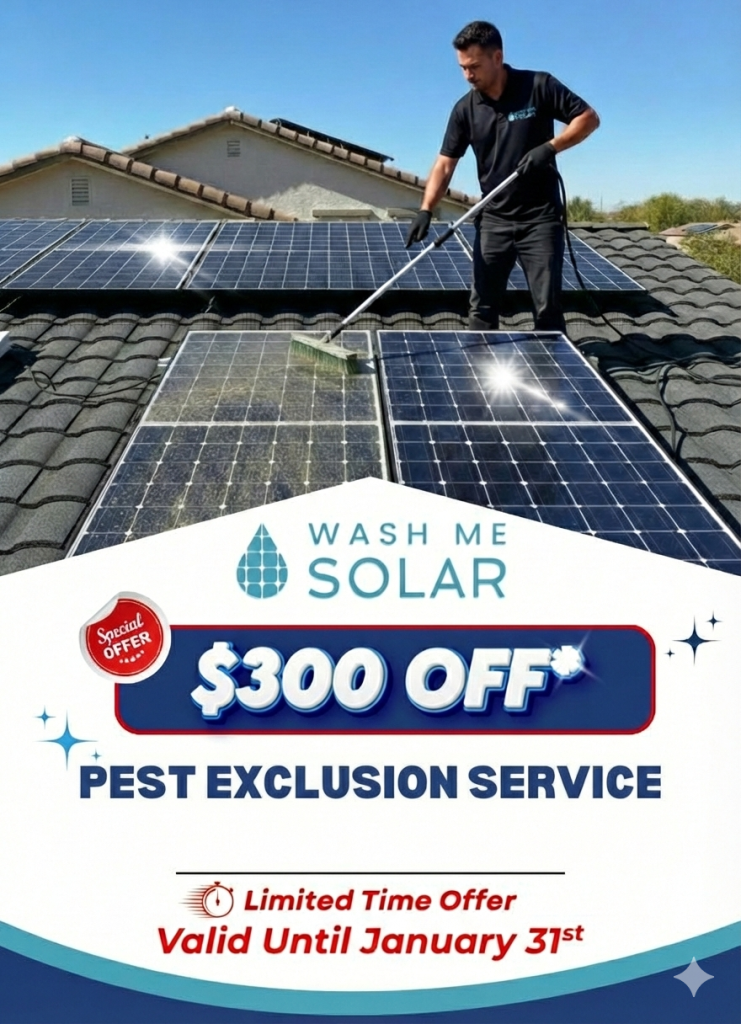
Don’t let critters compromise your solar system’s efficiency and safety. Contact Wash Me Solar for a free consultation and ensure your solar panels are secure from wildlife hazards!